



The Sydney Beauty Tech Company Quietly Powering the Future of Personalised Makeup
Author: Holly Hunter
16 Jul 2026
Match My Makeup, founded in Sydney by computer scientist and lawyer Victoria Ha, began with a simple but deeply human problem: finding the right foundation shade. Today, the company powers shade matching and personalised colour recommendations for some of the world’s most influential beauty retailers and brands, including MECCA in Australia, Nykaa and Tira in India, Korean beauty leaders TIRTIR and Beauty of Joseon, and US powerhouse e.l.f. Cosmetics.
For a bootstrapped company that started far from the headquarters of global beauty conglomerates, Match My Makeup’s rise has been anything but ordinary.
The platform now analyses 50,000+ shades across more than 270 brands and powers more than 12.8 million shade-finding journeys annually across retail partners and MatchMyMakeup.com. Customers using Match My Makeup convert up to three times higher than non-users, showing that personalised shade confidence is not just a better customer experience. It is a measurable commercial advantage.
The Underdog in a Category Built by Giants
Beauty tech is not a quiet space. Global companies such as L’Oréal’s ModiFace and Perfect Corp’s YouCam have shaped much of the conversation around virtual try-on, augmented reality, and AI-powered beauty experiences.
But Match My Makeup has taken a different path.
Rather than beginning with filters or visual effects, the company started with the hardest problem in colour cosmetics: complexion accuracy.
Foundation is where beauty e-commerce is often won or lost. If a customer gets the shade wrong, confidence disappears. The purchase is delayed, abandoned, returned, or never repeated. For retailers, that friction translates directly into lost conversion, increased returns, and reduced trust.
Match My Makeup set out to solve that problem at its root. Not by guessing, but by understanding colour.
As Victoria Ha explains:
“I didn’t want to build a beauty tool that guessed. I wanted to build something that worked. That meant doing the hard work of understanding undertone properly, because only then can technology replicate what a great makeup artist does so naturally: see the person in front of them and know what will suit them.”
From Founder Frustration to Global Beauty Infrastructure
The idea for Match My Makeup was born while Victoria was living and working in Silicon Valley. She was surrounded by technology, yet still found herself facing a surprisingly manual beauty problem.
Trying to match foundation shades across brands meant running between stores, comparing swatches, dealing with inconsistent shade names, changing light, oxidisation, and formulas that dried down differently on skin.
There was no reliable system that could translate colour from one brand to another in a way that felt accurate, scalable, and useful online.
That frustration became the seed of Match My Makeup.
What began as a founder’s personal challenge has grown into a global beauty technology platform powering leading retailers and brands around the world, remarkably without a traditional marketing budget. Its growth has not been loud or overnight. It has spread through word of mouth, commercial trust, and consistent results, built shade by shade, client by client, and category by category.
From its humble beginnings in Sydney, Match My Makeup is now positioned to help define the next era of beauty personalisation. Its strength is not simply that it can match foundation. It is that it understands colour in a way that is difficult to replicate across brands, formulas, undertones, categories, and individual consumer needs.
In a market where many beauty technology tools focus on what can be seen on the surface, Match My Makeup has built the intelligence layer underneath: the colour science, data, and artistry that make true personalisation possible.
From Shade Finder to Digital Makeup Artist
What makes Match My Makeup different is that it does not stop at foundation.
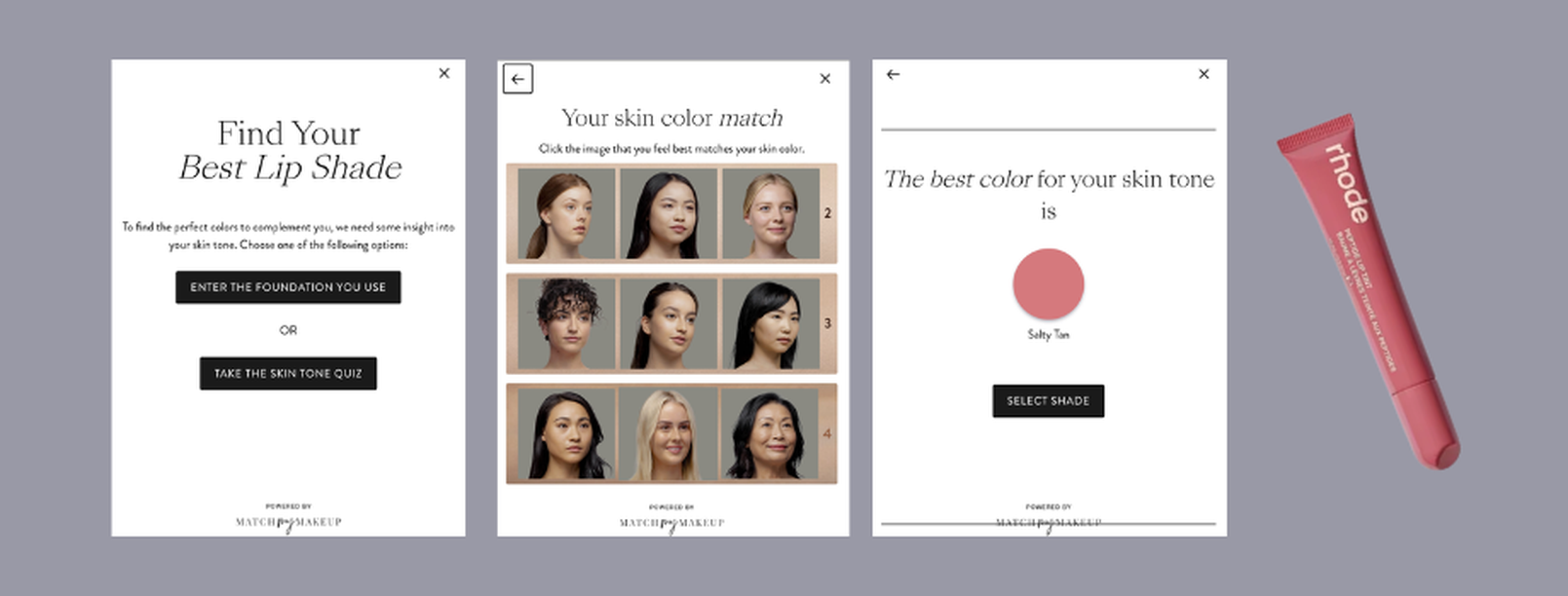
Once the platform understands a customer’s complexion profile, it can recommend shades across other colour categories, including lips, cheeks, and eyes. This is where Match My Makeup moves beyond traditional shade matching and into true personalisation.
A human makeup artist does not look at foundation in isolation. They consider the whole face: skin tone, undertone, eye colour, hair colour, contrast, and the relationship between colours. Match My Makeup has built technology that mirrors that thinking at scale.
The result is a personalised colour recommendation engine that can guide customers from foundation into blush, lipstick, and eyeshadow, with recommendations that feel like they came from a trained artist, not a generic algorithm.
And with virtual try-on layered into the experience, customers can not only receive a recommendation, but also see how it looks before they buy.
Why Retailers Are Paying Attention
The timing could not be more important.
Beauty customers now expect personalisation. They want help narrowing down choice, but they do not want to feel overwhelmed. Retailers, meanwhile, are under pressure to improve conversion, reduce returns, increase basket size, and create more confident digital shopping experiences.
Match My Makeup sits directly at that intersection.
Its platform helps solve consumer uncertainty while creating measurable commercial value for retailers. Customers using Match My Makeup convert up to three times higher than non-users, and the platform powers more than 12.8 million shade-finding journeys every year across its retail partners and direct website.
It supports online, mobile, and in-store journeys. It turns shade matching into a richer product discovery experience. And it gives brands and retailers access to a more intelligent way of understanding customer colour preferences.
MECCA’s adoption of Match My Makeup marks a major step in bringing personalised shade guidance to one of the most influential beauty communities in Australia. It also reflects a broader shift in the industry: retailers are no longer treating shade matching as a nice-to-have feature. They are recognising it as a core part of the digital beauty experience.
The First True Digital Makeup Artist
At its core, Match My Makeup is solving one of beauty’s oldest problems: what actually suits me?
Not what looks good on a model or what is trending, but what works for an individual customer’s skin colour, undertone, eye colour, hair colour, and overall complexion profile.
That is the promise of a true digital makeup artist.
For customers, it means less guesswork and more confidence.
For beauty advisors, it becomes an extension of their expertise.
For brands and retailers, it creates a smarter, more personalised path to purchase.
It is science-backed, but human.
Algorithmic, but artist-led.
Technical, but deeply personal.
As Match My Makeup continues to expand across complexion, lips, cheeks, eyes, and beyond, it is becoming increasingly clear that this Sydney-born company is not just participating in the future of beauty tech.
It is helping define it.
The underdog is no longer just catching up. It is quietly leading.


Subscribe
For all the latest news, tips, trends and exclusives, be sure to sign up to receive the latest straight to your inbox.
By clicking subscribe you agree to our terms and privacy policy.



Subscribe
For all the latest news, tips, trends and exclusives, be sure to sign up to receive the latest straight to your inbox.
By clicking subscribe you agree to our terms and privacy policy.